
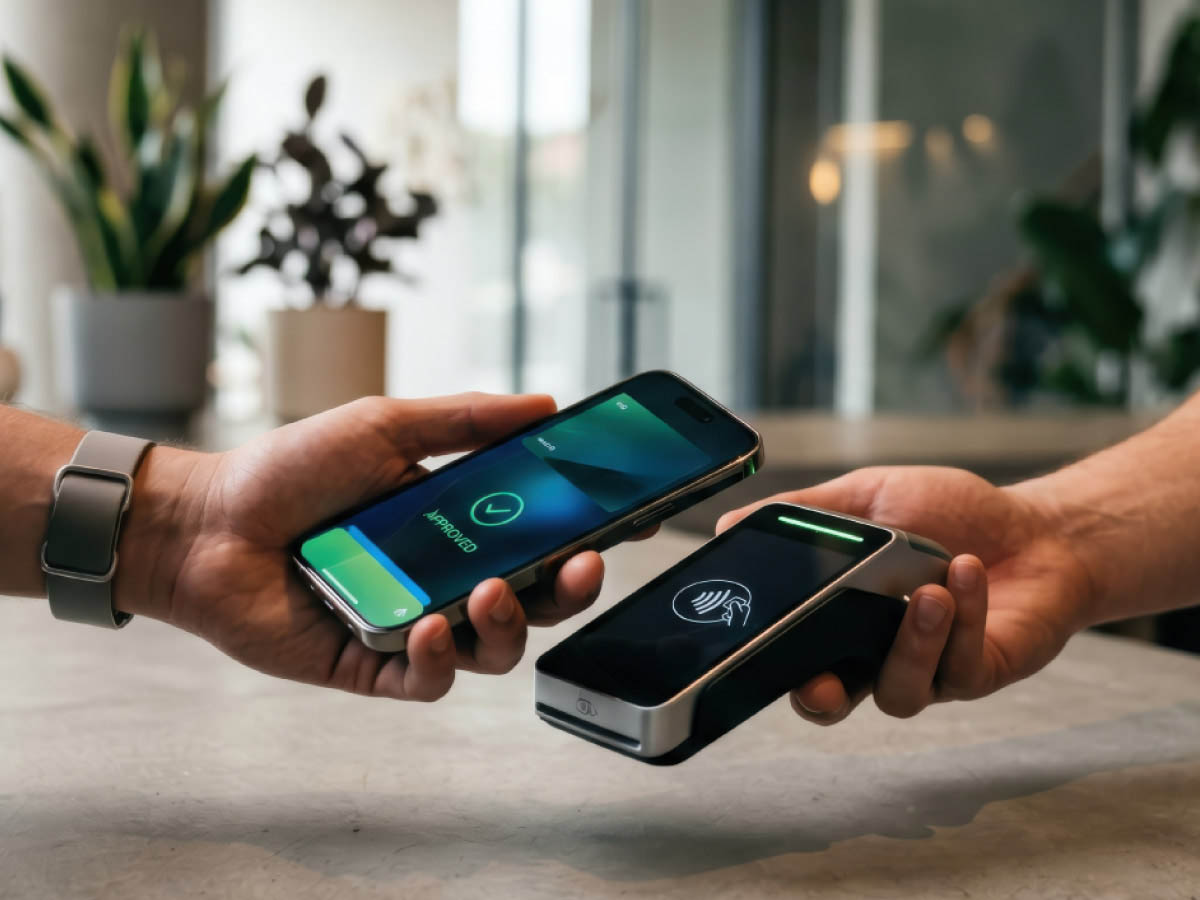
How Digital Wallets Protect Payment Data and Reduce Fraud Risk
How Digital Wallets Protect Payment Data and Reduce Fraud Risk
Digital wallets are designed with multiple security features intended to help protect payment credentials and reduce fraud risk. Rather than storing or transmitting actual card numbers during transactions, many digital wallets use technologies such as tokenization, encryption and biometric authentication to help reduce exposure to sensitive payment information. These measures can help improve security while supporting fast, seamless transactions.
Compared with traditional card payment methods that rely on visible card details, digital wallets may offer additional layers of protection through device-level security and authentication features. However, they should be viewed as one component of a broader payment security strategy, rather than a complete replacement for existing fraud prevention measures.
For banks and fintechs, digital wallet security is no longer just a consumer expectation, it is a business-critical priority tied to fraud prevention, compliance, customer trust and payment performance. Digital wallets also operate within modern payment ecosystems that prioritize secure, real-time transactions and built-in risk management.
Why payment data security matters in digital payments
The global shift toward digital commerce has dramatically increased the volume of sensitive payment data moving across networks every second. Every online purchase, mobile checkout, peer-to-peer transfer or instant payout creates potential exposure points for fraudsters seeking access to card numbers, account credentials or personally identifiable information.
For financial institutions, the consequences of compromised payment data can be severe including:
- Fraud losses and chargebacks
- Regulatory penalties
- Reputational damage
- Customer trust erosion
- Increased operational and compliance costs
As digital payment ecosystems grow more connected, the risk of fraud and data breaches increases. Banks, merchants, fintechs, wallet providers and payment processors all handle sensitive payment data, creating more potential attack points if security is weak. Industry payment fraud research continues to show the growing financial and operational impact of cyber incidents across digital payment ecosystems.
This is why payment data protection has become essential to digital commerce. Instead of exposing card details during transactions, newer payment technologies are designed to help keep sensitive credentials hidden and secure.
Digital wallets are a key part of this shift, using technologies like tokenization, encryption and biometric authentication to help reduce fraud and protect payment data.
What is a digital wallet?
A digital wallet is a software-based payment solution designed to store payment credentials using security controls.
Digital wallets enable users to make transactions electronically through smartphones, wearable devices, apps and online platforms. Popular examples include Apple Pay, Google Wallet, Samsung Wallet, PayPal and Cash App.
Unlike traditional card payments, digital wallets typically do not transmit raw card numbers to merchants. Instead, they use tokenization and encryption to replace sensitive credentials with secure digital tokens.
Digital wallets are software-based payment tools designed to store payment credentials and enable transactions while helping to limit the exposure of sensitive card or account data. By using encryption, tokenization and authentication technologies, digital wallets are designed to protect payment data and reduce fraud risk.
Are digital wallets secure and safe?
The most common question surrounding digital payments is: are digital wallets secure and safe?
Concerns about storing financial information on smartphones or cloud-connected platforms are understandable, particularly as cyber threats and identity theft continue to evolve. However, modern digital wallets are specifically engineered with multiple security layers designed to protect sensitive payment data and reduce unauthorized access.
Key security features of digital wallets include:
- Tokenization that replaces card details with secure digital tokens
- Encryption that helps protect payment data during transactions
- Biometric authentication, such as fingerprint or facial recognition
- Dynamic transaction credentials that help prevent replay attacks
- Device-level security controls for added protection
- Remote disable and wipe capabilities if a device is lost or stolen
Unlike traditional card transactions that often expose static card numbers to merchants, digital wallets minimize the sharing of sensitive payment information. This security-first approach helps reduce fraud risk while improving the customer payment experience.
Core security technologies that help make digital wallets secure
Tokenization
Tokenization is one of the most important technologies powering digital wallet safety.
Instead of transmitting an actual card number during payment, the wallet generates a unique payment token. This token acts as a substitute credential and is designed to be unusable outside the approved transaction environment.
Benefits include:
- Card numbers are never exposed to merchants
- Reduced risk of large-scale data breaches
- Lower fraud potential from stolen credentials
Tokenization in payments dramatically reduces the value of stolen transaction data because attackers cannot reuse the token elsewhere.
Encryption
Digital wallets use encryption to protect payment data both:
- In transit during transactions
- At rest on secure systems or devices
Encryption converts sensitive data into unreadable code unless accessed with authorized cryptographic keys.
Device-level security
Digital wallets also benefit from built-in security features on modern smartphones and connected devices. Many devices include secure areas designed to help protect sensitive payment information from unauthorized access.
By separating payment activity from the rest of the device, these protections help reduce the risk of malware, compromised apps and cyberattacks accessing stored payment credentials or authentication data. This added layer of protection plays an important role in digital wallet safety and mobile wallet security.
Biometric authentication
Biometric security adds another protection layer through:
- Fingerprint authentication
- Facial recognition
- Iris scanning
This reduces dependence on passwords alone and strengthens identity verification before transactions are approved.
Multi-factor authentication (MFA)
Many digital wallets also require:
- Passcodes
- One-time verification codes
- Device authentication
- Behavioral risk checks
Combining multiple authentication methods significantly reduces account takeover risk.
Dynamic transaction credentials
Unlike physical cards that use static information, digital wallets often generate dynamic transaction credentials for each payment.
This means:
- Credentials cannot easily be reused
- Replay attacks become harder
- Fraud detection becomes more accurate
How digital wallets can help protect payment data during a transaction
Digital wallets are engineered to minimize exposure to sensitive financial data throughout the payment lifecycle.
Here’s a simplified breakdown of how the process typically works:
- The user initiates a payment using a wallet
- The wallet authenticates the user
- A payment token is generated
- Encrypted transaction data is transmitted
- The issuer verifies the transaction
- Payment approval occurs without exposing the actual card number
The process is designed so that the merchant does not typically receive the customer’s actual card number.
This security architecture helps reduce:
- Merchant-side breach exposure
- Credential theft
- Payment skimming
- Fraud from stolen card databases
- Unauthorized reuse of payment data
Digital wallets also operate within modern payment ecosystems that prioritize secure, real-time transactions and built-in risk management capabilities across issuers, networks, processors and wallet providers.
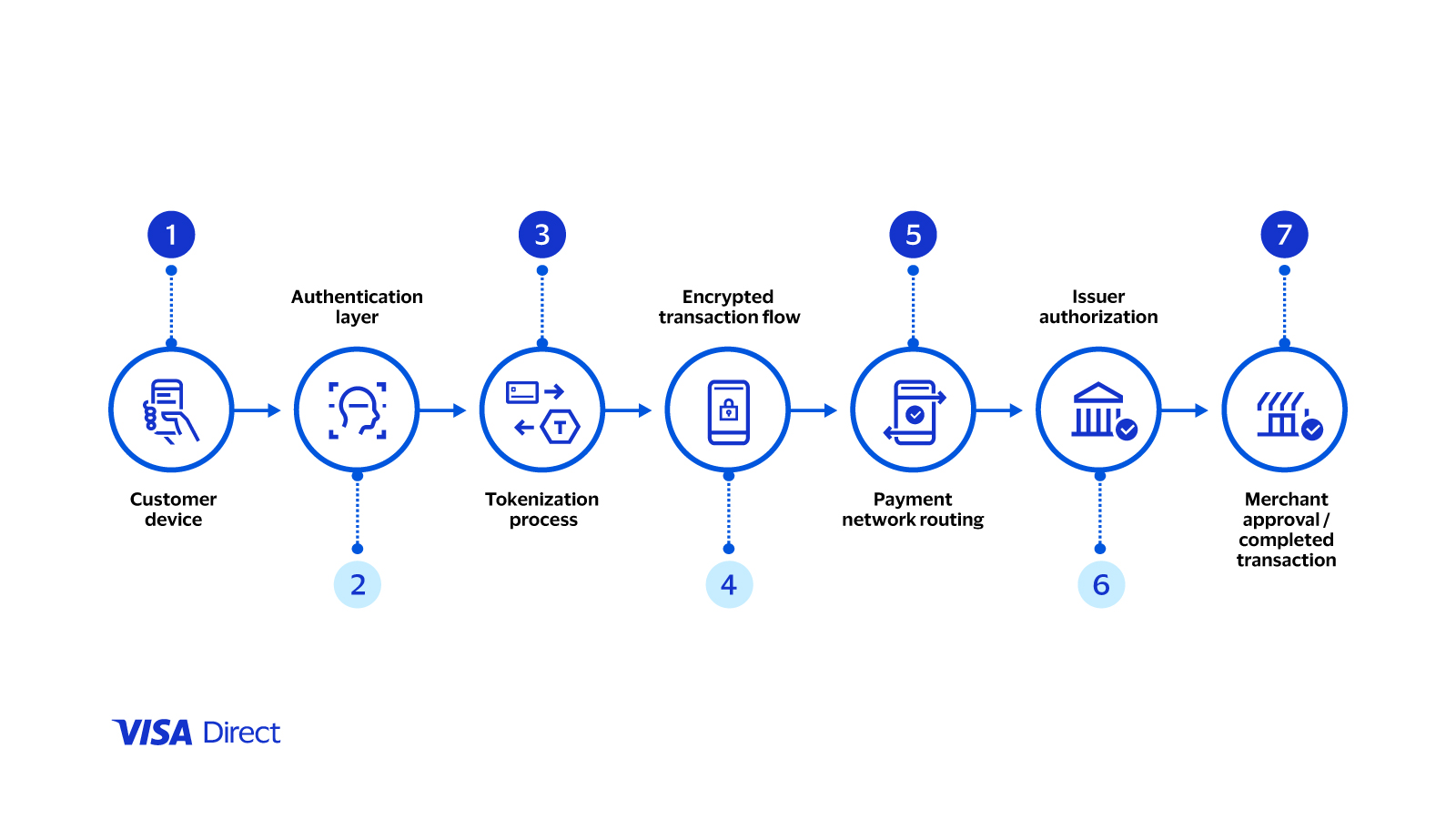
Digital wallet payment flow: How digital wallets protect payment data
Digital wallet benefits for banks and fintechs
Digital wallet security is not only important for consumers. It also creates strategic and operational advantages for banks, fintechs and payment providers.
Reduced fraud exposure
Tokenization and stronger authentication controls can help reduce fraud rates associated with stolen card credentials and unauthorized transactions.
Improved authorization performance
More accurate identity verification and transaction intelligence can improve authorization decisions while reducing false declines.
Lower data breach risk
Because merchants and intermediaries may handle fewer raw payment credentials, digital wallets can help reduce exposure to sensitive card data.
Alignment with zero-trust security models
Digital wallets support broader zero-trust payment architectures by emphasizing continuous verification, device trust and limited credential exposure.
Enhanced customer confidence
Consumers increasingly expect secure, seamless digital payment experiences. Strong digital wallet safety practices can help improve trust, retention and customer satisfaction.
Regulatory and Compliance Considerations
As digital wallets continue to scale globally, regulatory and compliance requirements remain critical for banks, fintechs, wallet providers, merchants and payment networks.
A key consideration is alignment with the Payment Card Industry Data Security Standard (PCI DSS) requirements, which help organizations protect sensitive payment card information.
Digital wallets help support PCI DSS objectives by:
- Reducing direct exposure of raw card data
- Using tokenized payment credentials
- Supporting encryption requirements
- Strengthening authentication controls
- Improving transaction traceability
However, compliance responsibilities are shared across multiple parties within the payment ecosystem.
Shared responsibility model
Digital wallet security typically involves shared responsibilities between:
- Wallet providers
- Issuing banks
- Merchants
- Payment processors
- Payment networks
- Consumers
Each participant plays a role in securing payment infrastructure, monitoring fraud, managing authentication and protecting sensitive data.
Data privacy and consumer protection
Banks and fintechs must also consider broader data privacy regulations and cybersecurity obligations related to:
- Customer consent
- Data minimization
- Secure storage practices
- Identity verification
- Incident response
- Fraud reporting requirements
Authoritative guidance from organizations such as the National Institute of Standards and Technology and the Bank for International Settlements continues to shape digital payment security best practices globally.
Financial institutions should also monitor evolving guidance from payment networks and cybersecurity frameworks as digital wallet ecosystems mature.
Potential risks and limitations
Although digital wallets offer strong security advantages, they are not risk-free.
Device compromise
If a smartphone or connected device is infected with malware or becomes compromised, attackers may attempt to gain unauthorized wallet access.
User behavior risks
Weak passwords, phishing attacks, social engineering and poor device hygiene can still undermine wallet security.
Interoperability challenges
Different wallet providers, banks and payment systems may have varying security standards and implementation models.
Ongoing security maintenance
Digital wallet ecosystems require continuous:
- Software updates
- Fraud monitoring
- Threat detection
- Security testing
- Compliance management
Cyber threats continue to evolve, meaning payment security must evolve alongside them.
The future of digital wallet security
As digital payments continue to evolve, the future of digital wallet security will likely be shaped by increasingly intelligent and adaptive fraud prevention technologies.
Several trends are expected to influence the next generation of mobile wallet security:
- More advanced tokenization models
- AI-driven fraud detection and behavioral analytics
- Passkeys and passwordless authentication
- Embedded and invisible payment experiences
- Expanded biometric authentication capabilities
- Digital identity integration
- Stronger real-time risk analysis
Digital wallets are also expected to play a larger role beyond payments, including secure identity verification, credential storage and authentication across digital ecosystems.
For banks, fintechs and payment providers, this evolution will continue increasing the importance of secure, fast, and trusted payment infrastructure.
Frequently asked questions
Frequently asked questions
Are digital wallets safe to use?
Yes, digital wallets are generally considered safe because they use multiple layers of security to protect payment information.
How safe are digital wallets for storing payment data?
Digital wallets are designed to securely store payment credentials without directly exposing raw card or account numbers. Instead of transmitting actual card details, wallets use tokenized credentials and encrypted communication channels to help protect payment data both at rest and during transactions.
Are digital wallets secure?
Digital wallets are designed with advanced security technologies that help protect payment data during transactions. Unlike physical cards that rely on static card numbers, digital wallets use dynamic tokens and authentication controls to limit exposure of sensitive information and reduce the risk of data misuse.
By combining tokenization, encryption and biometric verification, digital wallets provide a secure environment for electronic payments while maintaining convenience and privacy.
How do digital wallets protect payment information?
Digital wallets protect payment information through technologies such as tokenization, encryption, biometric authentication, multi-factor authentication and secure device hardware. During a transaction, the wallet sends a unique payment token instead of the actual card number, helping reduce the risk of payment data theft.
What makes digital wallets secure?
Digital wallets are secure because they combine several advanced security layers, including:
- Tokenization in payments
- End-to-end encryption
- Biometric authentication
- Device-level security
- Dynamic transaction credentials
- Real-time fraud monitoring
Together, these technologies help reduce fraud exposure and improve payment data protection.
What risks should banks consider with digital wallets?
Although digital wallets improve payment security, banks and fintechs still need to consider risks such as device compromise, phishing attacks, account takeover attempts, third-party provider risk and evolving cyber threats. Ongoing fraud monitoring, authentication controls, and secure payment infrastructure are essential for maintaining digital wallet security at scale.
Important notes:
All brand names, logos and/or trademarks are the property of their respective owners, are used for identification purposes only, and DO NOT necessarily imply product endorsement or affiliation with Visa.