
Digital wallets explained: What they are and how they work
Digital wallets explained: What they are and how they work
So, what is a digital wallet, and why has it become such a critical part of today’s commerce? In simple terms, digital wallets enable faster, more convenient transactions by securely storing payment information and streamlining the payment process across digital and physical environments. As adoption of digital wallets continues to grow, they are reshaping how consumers and businesses interact within the global payments’ ecosystem.
What is a digital wallet?
A digital wallet acts as a virtual version of a physical wallet. It allows users to store payment information securely on a smartphone, tablet or computer, enabling users to store credit cards, debit cards, along with other financial credentials in one secure place.
Digital wallets can be used in a wide variety of scenarios beyond basic payments, including:
- Paying in-store using contactless payments
- Completing online or in-app purchases
- Sending money to friends or family
- Storing digital assets such as tickets, boarding passes, IDs and loyalty cards
- Managing subscriptions
By combining convenience with secure storage, digital wallets simplify how users interact with their finances. These capabilities make digital wallets a central hub for both financial and non-financial interactions.
What is the primary purpose of a digital wallet?
The primary purpose of a digital wallet is to securely store payment credentials and enable fast, convenient transactions without the need for physical cards or cash.
Core functions of digital wallets:
- Secure storage
Digital wallets store sensitive payment information in an encrypted format, reducing the need to carry physical cards. - Faster transactions
Payments are typically processed quickly, with confirmation often received within seconds. - Convenience
Users can manage multiple payment methods in one place, eliminating the need to switch between cards or accounts.
How do digital wallets work?
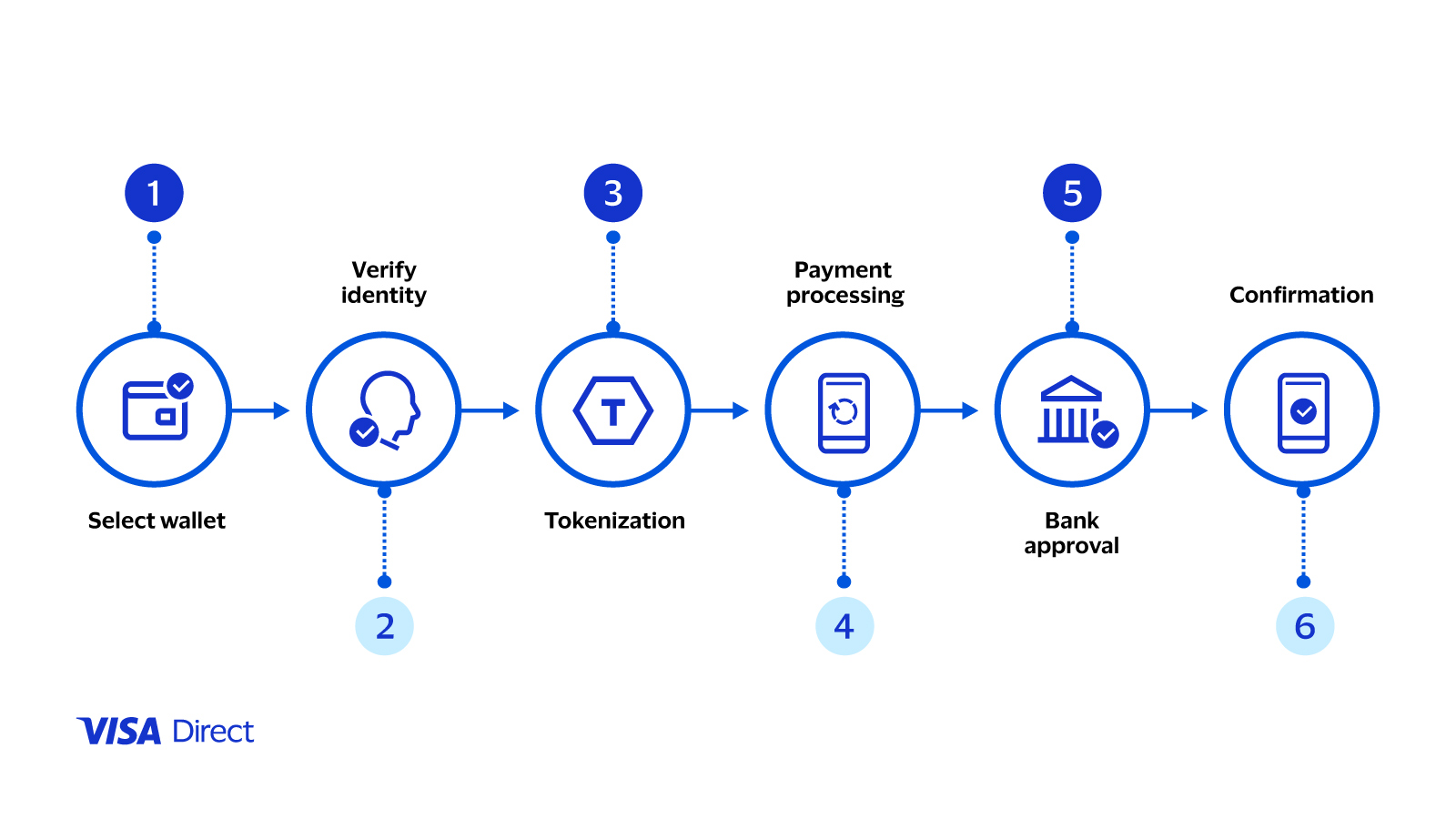
Digital wallet payments may look instant, but each transaction follows a secure process involving a user’s device, payment networks and bank. Here’s how it works step by step:
- User initiates payment
The user selects a product or service on their device and chooses to pay using a digital wallet such as Apple Pay, Google Wallet or PayPal. - Wallet authenticates the user
Before the payment is approved, the wallet verifies the user’s identity. This is usually done through Face ID, fingerprint recognition or a PIN. - Payment credentials are tokenized
Instead of sharing actual card details, the digital wallet converts them into a secure payment token. This helps reduce the exposure of sensitive financial information during the transaction. - Transaction is transmitted to the payment network
The tokenized payment data is sent from the wallet to the relevant payment network (such as Visa or Mastercard) through secure channels. - Bank authorizes the transaction
Your bank receives the request, checks available funds or credit and either approves or declines the transaction in real time. - Payment is completed
Once approved, a confirmation is sent back through the system, and the payment is completed within seconds.
Digital wallets in payment systems
Digital wallets play a critical role within the broader payments ecosystem. They connect users, merchants, and banks to enable secure cashless payments.
Wallet providers store payment credentials and connect directly with financial institutions for funding and verification. Transactions are processed through payment networks like Visa while operating across devices such as smartphones, tablets and even smartwatches.
They also support on-ramps and off-ramps, allowing users to add funds or withdraw money easily between wallets and bank accounts. This flexibility means digital wallets support a wide range of payment scenarios, from everyday purchases to global transactions.
Digital vs traditional payments
Features | Digital wallets | Traditional payments |
Speed | Faster processing in many cases | Slower processing |
Security | Tokenization and biometrics | May rely more heavily on manual entry of card details |
Convenience | Stored in an all-in-one place | Requires cash or physical cards |
Checkout process | One-tap or quick checkout | Manual entry or PIN required |
Key benefits of digital wallets
Digital wallets offer several key benefits for both consumers and businesses, including:
- Fast payments: A faster checkout experience with fewer steps
- Enhanced security: Encryption, tokenization, and biometrics help reduce risk
- Contactless convenience: Tap-to-pay using phones or wearables
- Smoother checkout: Less friction improves user experience and sales
- Multi-channel use: Works across online stores and physical shops
- Global reach: Accepted for domestic and international payments in many markets
What is a digital currency wallet?
A digital currency wallet is a specialized type of digital wallet designed to store and manage digital assets like cryptocurrencies.
Unlike traditional digital wallets that store your card information, digital currency wallets store private keys, which are essential for accessing and authorizing transactions on blockchain networks.
Key functions:
- Sending and receiving cryptocurrencies
- Managing digital asset balances
- Interacting with blockchain-based applications
Key differences:
- Traditional digital wallets store payment credentials linked to banks or card networks
- Digital currency wallets store cryptographic keys that provide access to digital assets
While both types of wallets enable digital transactions, their underlying technologies and use cases differ significantly.
What’s holding digital wallets back?
Despite their advantages, digital wallets also present certain challenges.
Accessibility and adoption barriers: Limited access to smartphones or internet connectivity in some regions can limit the ability to use a digital wallet.
Security risks: Although digital wallets are designed to be secure, risks such as phishing attacks, fraud and device theft still exist.
Device dependency: Digital wallets rely heavily on smartphones, tablets or watches.
Regulation and compliance: Digital payment systems must comply with a complex set of regional and international regulations,1 including financial rules, data protection laws, and privacy standards.²
Interoperability limitations: Not all digital wallets are universally accepted. Differences between platforms, merchants and countries can limit where and how wallets can be used, affecting overall convenience.
The future of digital wallets
Digital wallets are continuing to evolve as technology advances and more people adopt digital payments in their daily lives. What began as a simple way to store card details is quickly becoming a central tool for managing both financial and everyday activities.
Here are some of the key trends shaping the future of digital wallets:
Mobile-first experiences
Smartphones are becoming the primary way people pay, making digital wallets a default option for fast, on-the-go transactions.3
Integration with identity and credentials
Digital wallets are expanding beyond payments to store IDs, boarding passes, tickets and access credentials, creating a more seamless daily experience.4
Growth of super apps
More platforms are combining payments with messaging, shopping and financial services in one place, with digital wallets at the core of these ecosystems.
Support for digital currencies and tokenized payments
Digital wallets may support a wider range of payment types in the future, including digital currencies, depending on provider capabilities and regulatory frameworks.
Increased global adoption
As infrastructure improves and trust in digital payments grows, more consumers and businesses worldwide are turning to digital wallets for everyday transactions.
Frequently asked questions
Frequently asked questions
What is a digital wallet?
A digital wallet is a software-based application that securely stores payment information such as credit or debit cards and allows users to make electronic payments using a smartphone, tablet or other digital devices.
How do digital wallets work?
Digital wallets work by securely storing your payment details and using technologies like tokenization and encryption. When you make a payment, your actual card details are replaced with a secure token, and the transaction is authenticated before being processed through payment networks.
How do you use a digital wallet?
You use a digital wallet by selecting it at checkout, either online or in-store. For in-person payments, you can simply tap your phone or device at a contactless terminal. For online purchases, you choose the wallet as your payment method and confirm the transaction (often with your Face ID or phone password).
How do you set up a digital wallet?
To set up a digital wallet, download a wallet app or use a built-in option on your device, add your debit or credit card details, verify your identity and enable security features such as biometrics, a PIN or a password.
Are digital wallets safe?
Yes, digital wallets are designed with multiple security features. They use encryption, tokenization, and authentication methods like fingerprint or facial recognition to protect your payment information and reduce the risk of fraud.
What is a digital currency wallet?
A digital currency wallet is a type of wallet used to store and manage cryptocurrencies. Instead of storing traditional card details, it stores private keys that allow users to send, receive and manage digital assets on blockchain networks.
Important note:
All brand names and trademarks are the property of their respective owners and do not imply endorsement.
This content is provided for informational purposes only and does not constitute legal, regulatory, or financial advice. Availability, features, and functionality of payment services may vary by provider, geography, account type, and applicable laws.
Sources:
- Cross-Border Payment Regulations: Key Compliance Challenges for Fintechs , PayCompliance, February 2025 [paycompliance.com]
- Compliance in Cross-Border Payments: Ensuring Secure Transactions, Convera, July 2025.
- Over half of UK adults now use mobile wallets.
- Digital Identity Sectoral Analysis 2025.