
Stablecoin cross-border payments are international money transfers conducted using blockchain-based digital currencies pegged to fiat values. They enable near-instant settlement between counterparties in different countries without requiring a chain of correspondent banks.

How stablecoins are reinventing cross-border payments
How stablecoins are reinventing cross-border payments
Moving money across borders has never been simple. A payroll disbursement from a US headquarters to a supplier in Vietnam, a remittance sent from a London worker to family in Lagos, a treasury settlement between corporate entities in Frankfurt and Singapore — each of these transactions passes through layers of intermediaries, navigates multiple currencies and can take days to finalize. Much of the infrastructure underpinning international payments was designed decades ago, and many core processes have evolved incrementally rather than fundamentally.
By combining the programmability of blockchain networks with the price stability of fiat-pegged digital currencies, stablecoins can offer financial institutions a path to faster settlement, potentially lower transaction costs and improved transaction visibility compared with traditional correspondent banking, subject to network, compliance and off‑ramp conditions.
This guide examines why traditional cross-border payment infrastructure struggles, how stablecoins function as a payment mechanism, the practical benefits for banks and fintechs and the risks and regulatory considerations that any institution must weigh before adopting them.
The problem with traditional cross-border payments
The problem with traditional cross-border payments
For decades, the Swift network and correspondent banking have served as the backbone of international finance. Yet their limitations are becoming harder to ignore as global commerce accelerates:
Slow settlement:
Cross-border transactions typically settle in two to five business days. This is a timeframe driven by the sequential processing of multiple banking hubs across different time zones. Cut-off times, national holidays and end-of-day batch processing compound the delay.1
High fees and FX spreads:
For business-to-business (B2B) transactions, fees from correspondent banks, foreign exchange (FX) conversion spreads and lifting charges can add significantly to the cost of international transfers, with the total burden varying widely by corridor, provider and transfer size.
Multiple intermediaries:
A single payment may traverse two, three or more correspondent banks before reaching its destination. Each hop adds delays, introduces the possibility of error and creates a new node at which funds can be delayed or frozen.
Limited transparency:
Tracking a cross-border wire in real time remains difficult. Payment statuses are often unavailable until settlement is confirmed, making cash flow forecasting and reconciliation a manual exercise for treasury teams.
What are stablecoins?
What are stablecoins?
Stablecoins are blockchain-based digital currencies designed to maintain a stable value relative to a reference asset — most commonly a fiat currency such as the US dollar or euro. Unlike volatile cryptocurrencies such as Bitcoin or Ether, stablecoins aim to minimize price fluctuation, making them practical for everyday transactions.
The three principal stablecoin architectures :
Fiat-backed stablecoins:
The most widely used category. Each unit is backed by liquid assets or one-to-one fiat reserves held in regulated financial institutions. USD Coin (USDC), issued by Circle, and Tether (USDT) are the leading examples. Reserve transparency and third-party auditing are central to their credibility.
Crypto-backed stablecoins:
Collateralized by other digital assets, typically over-collateralized to absorb price volatility in the underlying crypto reserves.
Algorithmic stablecoins:
Peg is maintained through algorithmic supply adjustments rather than direct asset backing. These carry a higher risk and have experienced notable failures; institutional adoption remains limited.
Definition: Stablecoins cross-border payments
Definition: Stablecoins cross-border payments
Stablecoin cross-border payments are international transactions conducted using blockchain-based digital currencies that are typically pegged to fiat currencies. They enable near-instant settlement, reduce reliance on intermediaries and improve transparency, making them an efficient alternative to traditional cross-border payment systems.
Why stablecoin cross-border payments are gaining traction
Why stablecoin cross-border payments are gaining traction
Demand for speed: Businesses and consumers increasingly expect near-instant global payments. The gap between the speed of digital commerce and the pace of traditional settlement is no longer tolerable for many use cases.
Growth of digital asset infrastructure: Networks such as Ethereum, Stellar and Solana have demonstrated the capacity to process millions of transactions daily.
Cost pressure: Competitive fintech entrants have raised the bar for price transparency. Incumbents are under pressure to reduce cross-border fees and eliminate opaque FX spreads.
Demand for 24/7 availability: Global business does not pause for banking hours. Stablecoin payment rails operate continuously, enabling blockchain settlement at any time — though on- and off-ramp availability may vary by provider and corridor.
Evolving regulatory frameworks: In the US, legislation such as the Guiding and Establishing National Innovation for U.S. Stablecoins Act (GENIUS Act) seeks to establish a formal framework for stablecoin issuance and oversight. With the Markets in Crypto-Assets (MiCA) regulation, the EU has introduced a harmonized legal framework for stablecoins, with implementation and supervisory practices continuing to evolve.
How stablecoin enhances cross-border payment efficiency for financial institutions
How stablecoin enhances cross-border payment efficiency for financial institutions
The efficiency gains from stablecoin payment rails touch every stage of the transaction lifecycle:
Faster settlement: Where correspondent banking requires two to five days, blockchain-based stablecoin transfers may settle in seconds to minutes, depending on the network used, transaction conditions and compliance processes. This transforms treasury cash-flow management and reduces counterparty exposure.
- Reduced transaction costs: By removing correspondent bank fees and narrowing FX spreads, particularly on corridors with limited banking competition, institutions can meaningfully lower the cost per transaction, especially at scale.
- Fewer intermediaries: Stablecoin transfers reduce reliance on correspondent bank intermediaries, which may still exist for infrastructure purposes but play a less central role in the payment chain. This results in fewer opportunities for delay, error or additional charges.
- Improved liquidity management: Faster settlement can reduce the need to pre‑fund nostro accounts across multiple currencies and geographies, freeing up working capital that would otherwise sit idle.
- Greater transparency and traceability: Transactions are recorded on public or permissioned distributed ledgers, providing a tamper‑resistant audit trail that can improve transparency and reduce the reconciliation burden for operations teams.
- Streamlined reconciliation: Programmable settlement and on-chain transaction data reduce the need for manual matching and exception handling, allowing payment operations teams to process higher volumes with the same headcount.
How stablecoin cross-border payments work
How stablecoin cross-border payments work
At its core, a stablecoin cross-border payment replaces the correspondent banking chain with a blockchain network: the stablecoin functions as a neutral, stable intermediary asset that both parties can accept. While the underlying mechanics differ from traditional correspondent banking, the core payment flow can be described in a small number of high‑level steps.
The process unfolds in three broad phases:
- Fiat-to-stablecoin conversion. The sending institution converts local fiat currency into a stablecoin — typically USDC or USDT — via a regulated on-ramp or directly through its banking partner. The conversion rate is published and transparent.
- Blockchain transfer. The stablecoin is transmitted across a blockchain network to the recipient's wallet address. Settlement times vary by network but are typically completed within minutes, and the transaction is verified on-chain.
- Stablecoin-to-fiat conversion. The receiving institution converts the stablecoin into local fiat via a regulated off-ramp, delivering funds to the end beneficiary in their local currency.
Stablecoin payment flow: step by step
Stablecoin payment flow: step by step
- Sending institution converts fiat currency into stablecoin via a regulated on-ramp or custodian.
- Stablecoin is transferred across a blockchain network such as Stellar, Ethereum or Solana to the recipient's wallet.
- The transaction is validated by network nodes and recorded on-chain within seconds to minutes.
- Recipient institution or wallet receives the stablecoin: confirmation is immediate and verifiable.
- Recipient converts stablecoin into local fiat currency via a regulated off-ramp or banking partner.
Traditional vs. Stablecoin Cross-Border Payments
| Factor | Traditional (SWIFT) | Stablecoin Rail |
|---|---|---|
| Settlement Speed | 2–5 business days | Near-instant (minutes) |
| Transaction Cost | Variable; can be significant | Significantly lower in many cases |
| Intermediaries | Multiple correspondent banks | Few or none |
| Operating Hours | Business hours only | 24/7/365 |
| Transparency | Limited tracking | On-chain visibility |
| FX Spread | Opaque, variable | Transparent, competitive |
| Reconciliation | Manual, time-consuming | Automated, real-time |
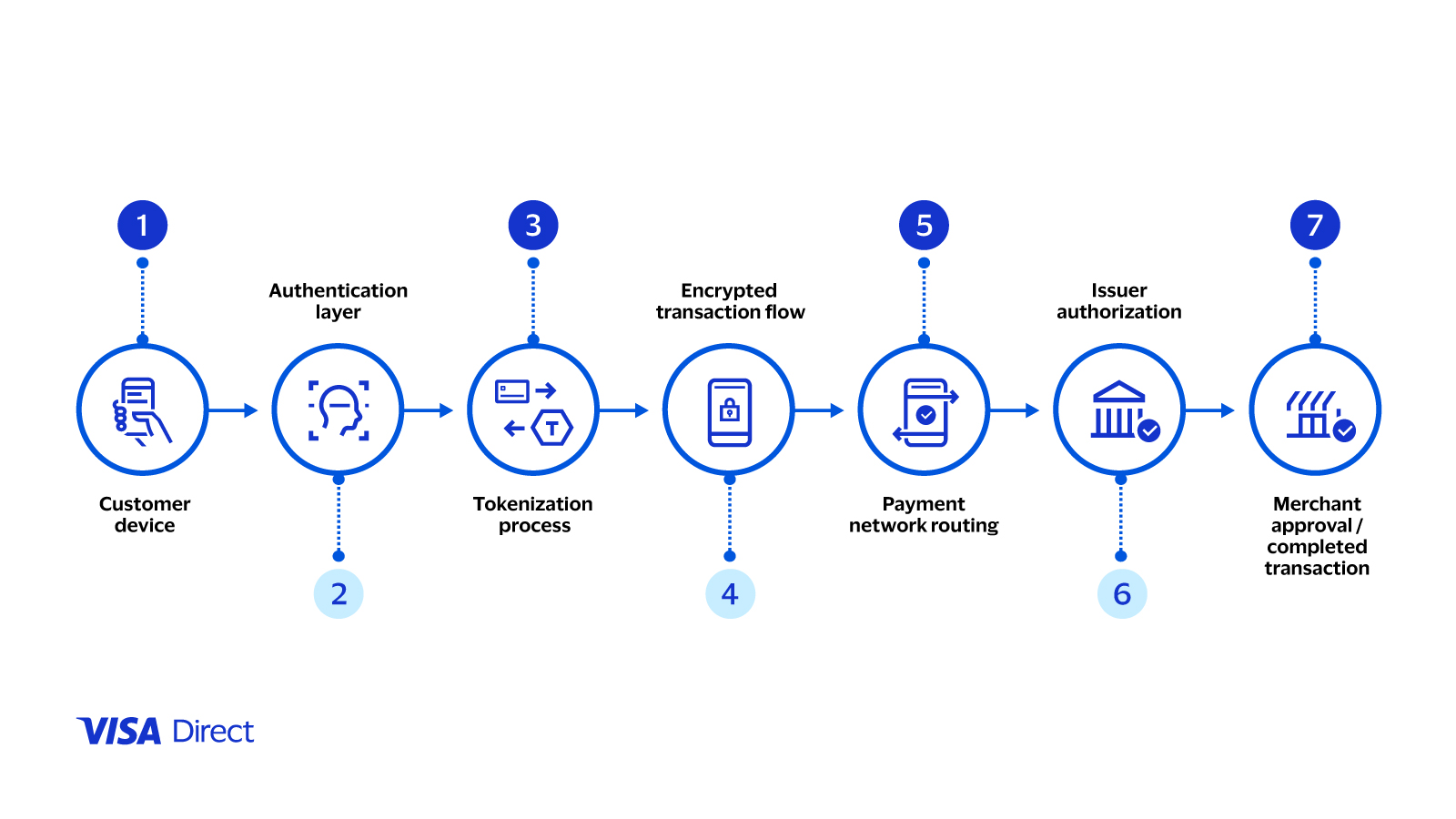
See extended description here
Real-world use cases in banking and fintech
Real-world use cases in banking and fintech
These use cases are illustrative only. Financial institutions are responsible for determining the suitability of any stablecoin payment model and for ensuring compliance with all applicable laws, regulations and internal risk policies.
Remittances:
The remittance market, estimated at $905 billion annually by the World Bank,2 is acutely sensitive to cost and speed. Stablecoin rails can enable migrant workers to send money home faster and more cheaply than traditional wire services or money transfer operators, particularly on corridors where banking infrastructure is thin.
B2B cross-border payments:
Corporates settling invoices with international suppliers face delays and costs that tie up working capital. Stablecoin settlement can enable near real-time or same day settlement for supplier payments regardless of geography.
Treasury and liquidity management:
Multinational treasury teams can use stablecoin rails to move liquidity between entities in real time, reducing the need for costly pre-funded nostro positions and improving overall cross-border payment efficiency. Ripple and other payments infrastructure providers have built institutional-grade solutions specifically for this use case.
Emerging market payment corridors:
In markets where local banking infrastructure is underdeveloped or FX spreads are punishing, for example across parts of Africa, Southeast Asia and Latin America, stablecoin corridors built on networks such as the Stellar Development Foundation's open network can offer a cost-competitive alternative to traditional rails.
Supplier and vendor payments:
Global enterprises managing large supplier networks can use stablecoin-based accounts payable workflows to potentially reduce payment cycle times, improving supplier relationships and enabling early-payment discount programs.
Stablecoins in payment infrastructure
Stablecoins in payment infrastructure
For institutions looking to integrate stablecoin payment rails, several infrastructure layers come into play:
Stablecoin issuers: Circle (USDC) and Tether (USDT) are the dominant fiat-backed stablecoin issuers. Institutional-grade issuers publish reserve attestations and operate under regulatory oversight in key jurisdictions.
Blockchain networks: Ethereum, Stellar, Solana and Polygon are among the networks most commonly used for stablecoin transfers. Network selection involves trade-offs across transaction speed, cost, finality and ecosystem maturity.
Application programming interfaces (APIs) and connectivity: Fintech platforms and payment service providers offer APIs that remove the complexity of blockchain interaction, enabling banks to integrate stablecoin rails without building blockchain infrastructure in-house.
Wallets and custody: Institutional-grade custody providers, including regulated trust companies and custodians, offer secure storage and transaction signing for stablecoin holdings, meeting banks1 security and compliance expectations.
On/off ramps: The fiat-to-digital and digital-to-fiat conversion points are critical infrastructure. Regulated ramp providers in key corridors determine the practical viability of deploying any stablecoin payment.
Benefits for financial institutions
Benefits for financial institutions
The case for stablecoin adoption in cross-border payments is multi-dimensional:
Lower operational costs: Reduced intermediary fees, lower FX spreads and automated reconciliation translate into meaningful improvements in unit economics at scale.
Faster settlement cycles: Near-real-time finality reduces counterparty risk and frees working capital across the treasury function.
Improved customer experience: Faster, cheaper and more transparent international payments are a differentiator in both retail and commercial banking markets.
Reduced reliance on correspondent banking: Institutions with thin correspondent networks, particularly in emerging markets, can extend their reach without having to build multiple new bilateral relationships.
Stablecoin challenges and considerations
Stablecoin challenges and considerations
Stablecoin cross-border payments are not without complexity. Institutions must evaluate the following risks carefully:
Regulatory uncertainty:
While frameworks are emerging, notably the EU's Markets in Crypto-Assets (MiCA) regulation and stablecoin legislation in the US, the global regulatory landscape remains fragmented. Compliance teams must monitor developments jurisdiction by jurisdiction.
Anti-money laundering (AML) and know your customer (KYC) compliance:
The Financial Action Task Force (FATF) has extended its Travel Rule to virtual asset service providers (VASPs), requiring the transmission of originator and beneficiary information for transactions exceeding specified thresholds³. Institutions must ensure their stablecoin workflows satisfy these obligations.
Depegging risk: While fiat-backed stablecoins have an established track record, no peg is mathematically guaranteed. Reserve quality, redemption mechanisms and issuer financial health are all factors that risk and compliance teams must assess on an ongoing basis.
Counterparty and reserve risk:
The integrity of a fiat-backed stablecoin depends entirely on the quality and accessibility of its reserves. Institutions should review independent attestations and, where available, regulatory oversight before holding or transacting in any stablecoin.
Integration complexity:
Connecting stablecoin payment rails to existing core banking systems, treasury management platforms and payment operations infrastructure needs meaningful technical investment. Legacy system interoperability is often the longest lead-time item in any deployment.
Interoperability:
Different stablecoins operate on different blockchain networks. These are not always interchangeable without additional conversion steps. Fragmentation across networks and issuers can create friction that partially offsets the efficiency gains.
The future of stablecoin for cross-border payments
The future of stablecoin for cross-border payments
Stablecoin adoption in institutional payments is moving from experimentation to deployment at scale. Several trends will shape the trajectory:
- Institutional adoption is accelerating: Major global banks and payment networks are piloting or deploying stablecoin payment infrastructure. The question is no longer whether institutions will engage, but how quickly and at what scale.
- Regulatory frameworks are maturing: As MiCA takes effect in Europe and comparable frameworks emerge in the US, UK and Asia-Pacific, the compliance environment will become clearer, removing one of the most significant barriers to adoption.
- Integration with existing rails: Rather than replacing Swift or local payment systems entirely, stablecoin rails are increasingly positioned as a complementary layer — handling specific corridors or use cases where they offer the most compelling advantage.
- Central bank digital currencies (CBDCs): The development of CBDCs by central banks in China, the EU and elsewhere will interact with, and in some cases compete with, commercial stablecoins. The interplay between CBDCs and private stablecoins is one of the most closely watched dynamics in global payments.
- Tokenized payments and financial systems: The broader movement toward asset tokenization — securities, trade finance instruments and real-world assets represented on blockchain — will increase demand for stablecoin settlement rails as the natural counterpart to tokenized assets. Tokenized payments are increasingly being explored across the financial sector, and stablecoin infrastructure is central to how those settlements will clear.
Frequently Asked Questions (FAQs)
Frequently Asked Questions (FAQs)
What are stablecoin cross-border payments?
How do stablecoins improve international payments?
Stablecoins improve international payments by replacing slow, multi-hop correspondent banking with direct blockchain transfers. Settlement that traditionally takes two to five business days can be completed in minutes, with greater cost transparency and real-time tracking.
How does stablecoin enhance cross-border payment efficiency for financial institutions?
For financial institutions, stablecoins can enhance cross-border payment efficiency by reducing settlement times to near-instant, lowering transaction fees, minimizing the number of intermediaries, automating reconciliation through on-chain records and enabling 24/7 payment operations — none of which are achievable with legacy correspondent banking rails.
Are stablecoin cross-border payments regulated?
Regulation varies by jurisdiction. The EU's MiCA framework establishes clear rules for stablecoin issuers operating in Europe. The US, UK, Singapore and other major financial centers are developing comparable frameworks. FATF guidance on virtual asset service providers extends AML/KYC and Travel Rule obligations to stablecoin transactions in many markets.3
What are the risks of stablecoins in banking?
Key risks include regulatory uncertainty in jurisdictions without clear frameworks, AML/KYC compliance obligations, the potential for stablecoin depegging if issuer reserves are insufficient or mismanaged, counterparty risk associated with stablecoin issuers, technical integration complexity with legacy core banking systems and fragmentation across blockchain networks.
How can banks use stablecoins for cross-border payments?
Banks typically engage through one of three pathways: partnering with a specialist payment infrastructure provider (such as Ripple or Circle) that offers stablecoin rails as a managed service; integrating directly with blockchain networks and regulated on/off-ramp providers via API; or piloting within a defined corridor or use case — such as treasury settlements or supplier payments — before broader deployment.
More Visa Direct blog posts
More Visa Direct blog posts
Read more perspectives from Visa experts on how Visa Direct supports global money movement and the evolving ways businesses send and receive payments.
Sources/Footnotes/Disclaimer
- Bank for International Settlements, "Swift gpi data indicate drivers of fast cross-border payments," February 2022. bis.org
- World Bank, Migration and Development Brief 40, June 2024. knomad.org/publication/migration-and-development-brief-40
- FATF, Guidance for a Risk-Based Approach to Virtual Assets and Virtual Asset Service Providers, October 2021. fatf-gafi.org